
Pauline’s Flowers
(Outside these walls)
To Pauline Trevelyan
Sarah Benjamin
[1]
Up we rise
Alive from
Cold columns
Prettifying the
Spaces in between
The Central Scenes
We stand strong
And proud but
Not as loud
As the Great,
Male,
March
of History
We sit quietly outside
The Brotherhood
Of the Great and the Good
Who proclaim their claim
To this land
And its History
As Clayton is transported back in time
To command legions on
Hadrian's windswept Wall
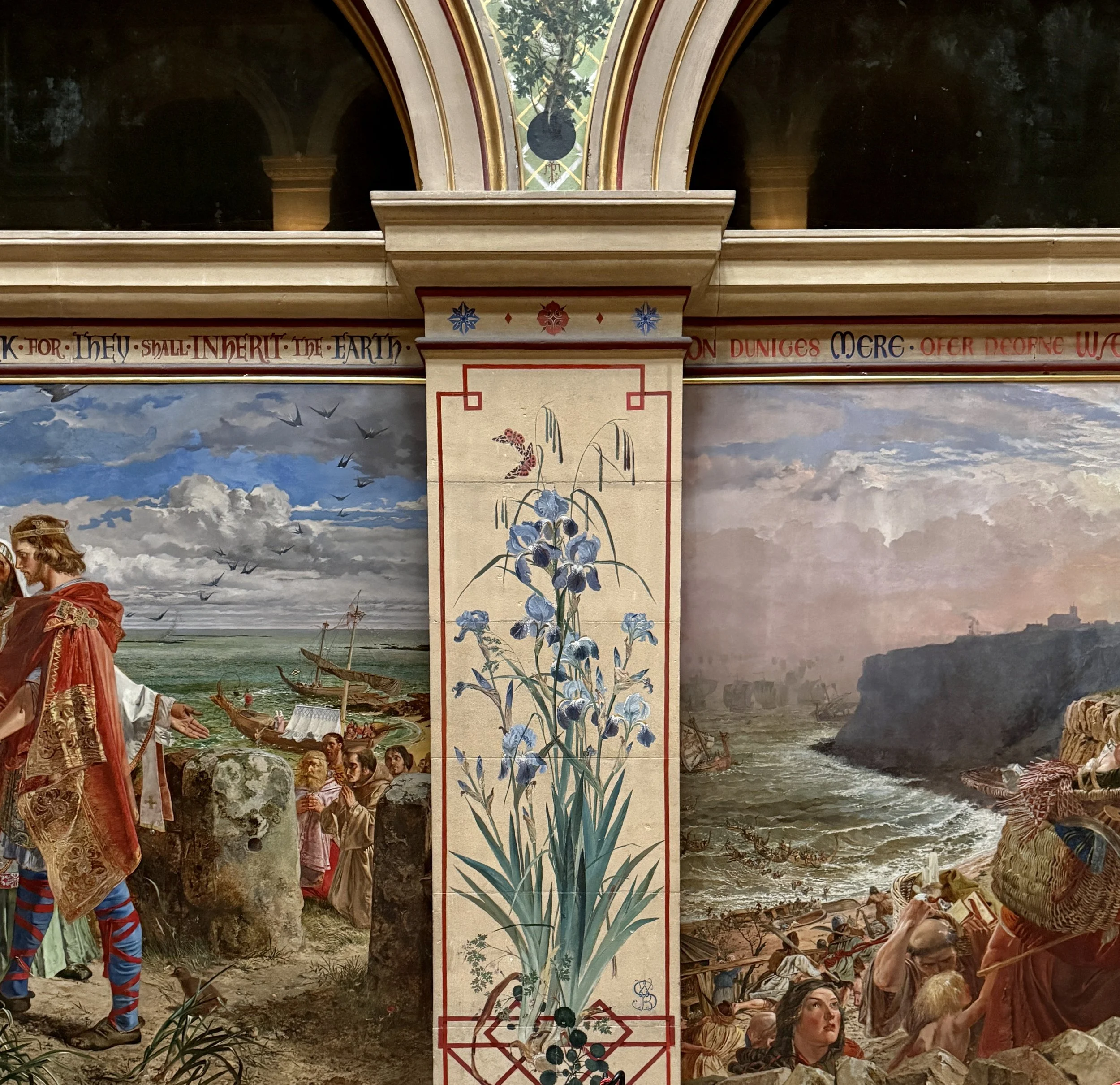
We are kissed by painted
Butterflies’ wings
As Bede’s soul soars
On the wings of a dove
Out of his earthly confines
Into eternity
We are corseted by colonnades,
Our skies enclosed
As Armstrong forges his history from iron and coal
We sway in the breeze of passing footfall
And sing softly of
England’s meadows and hedgerows
Running wild
Outside these walls [2]
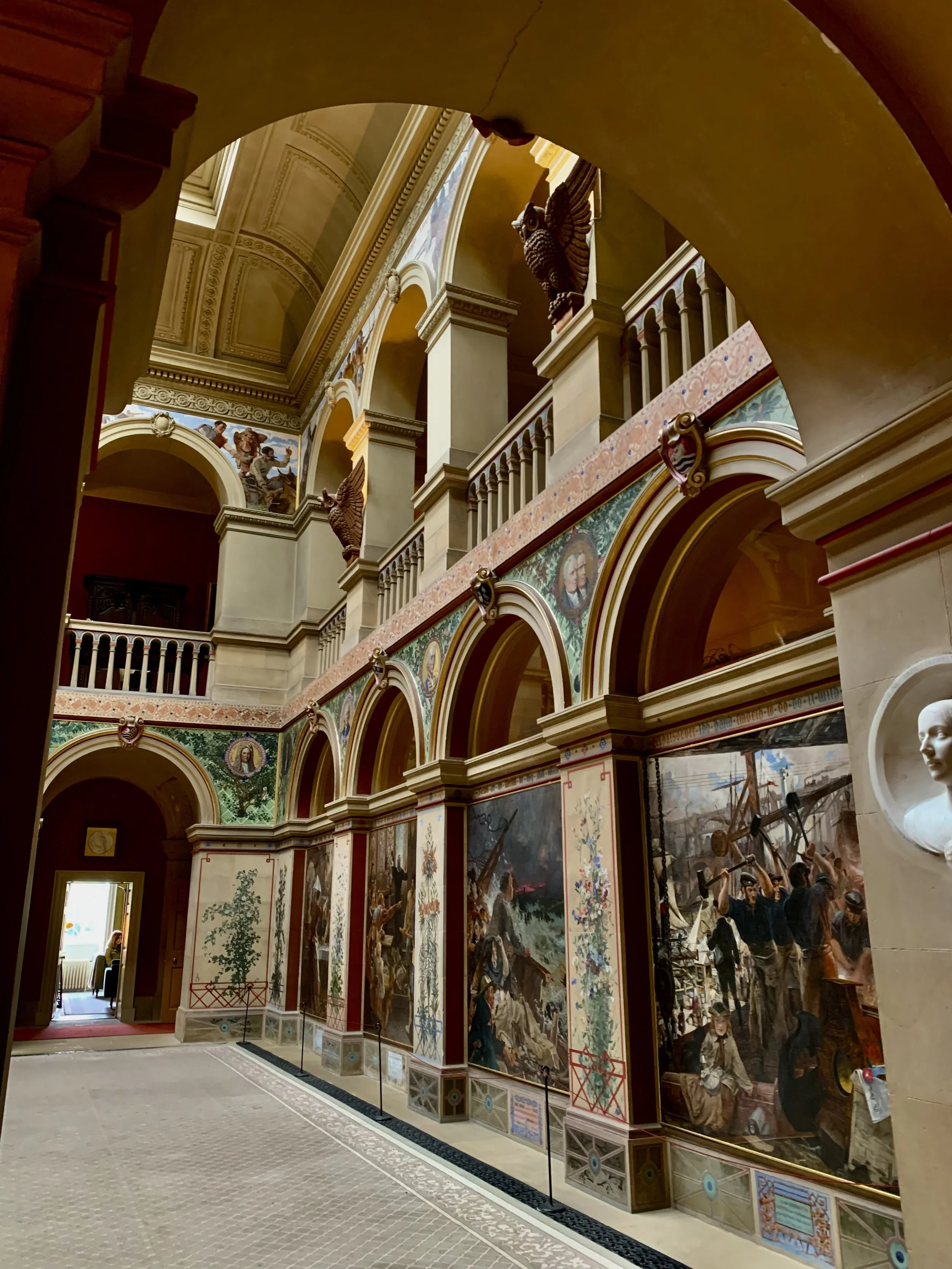
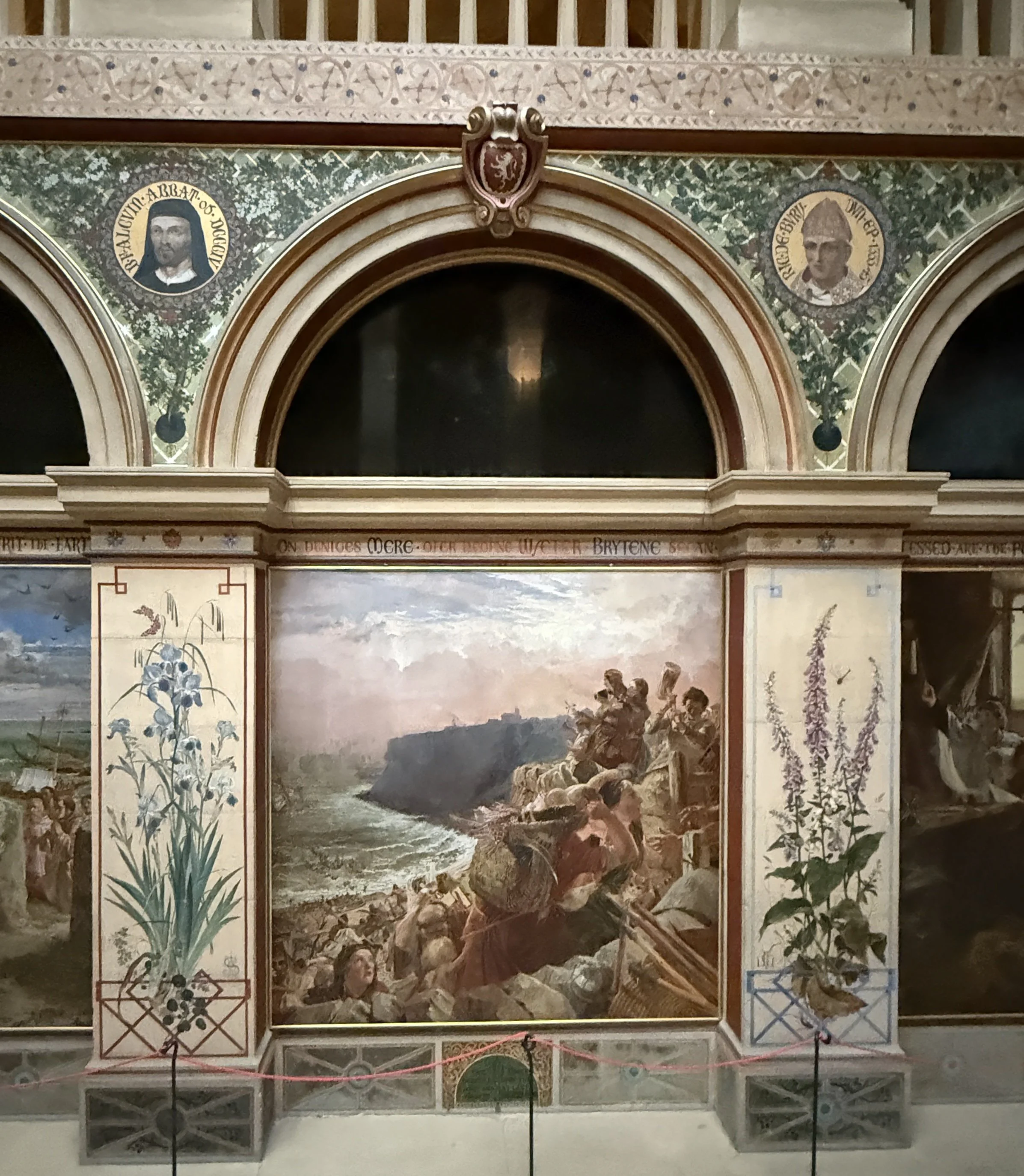
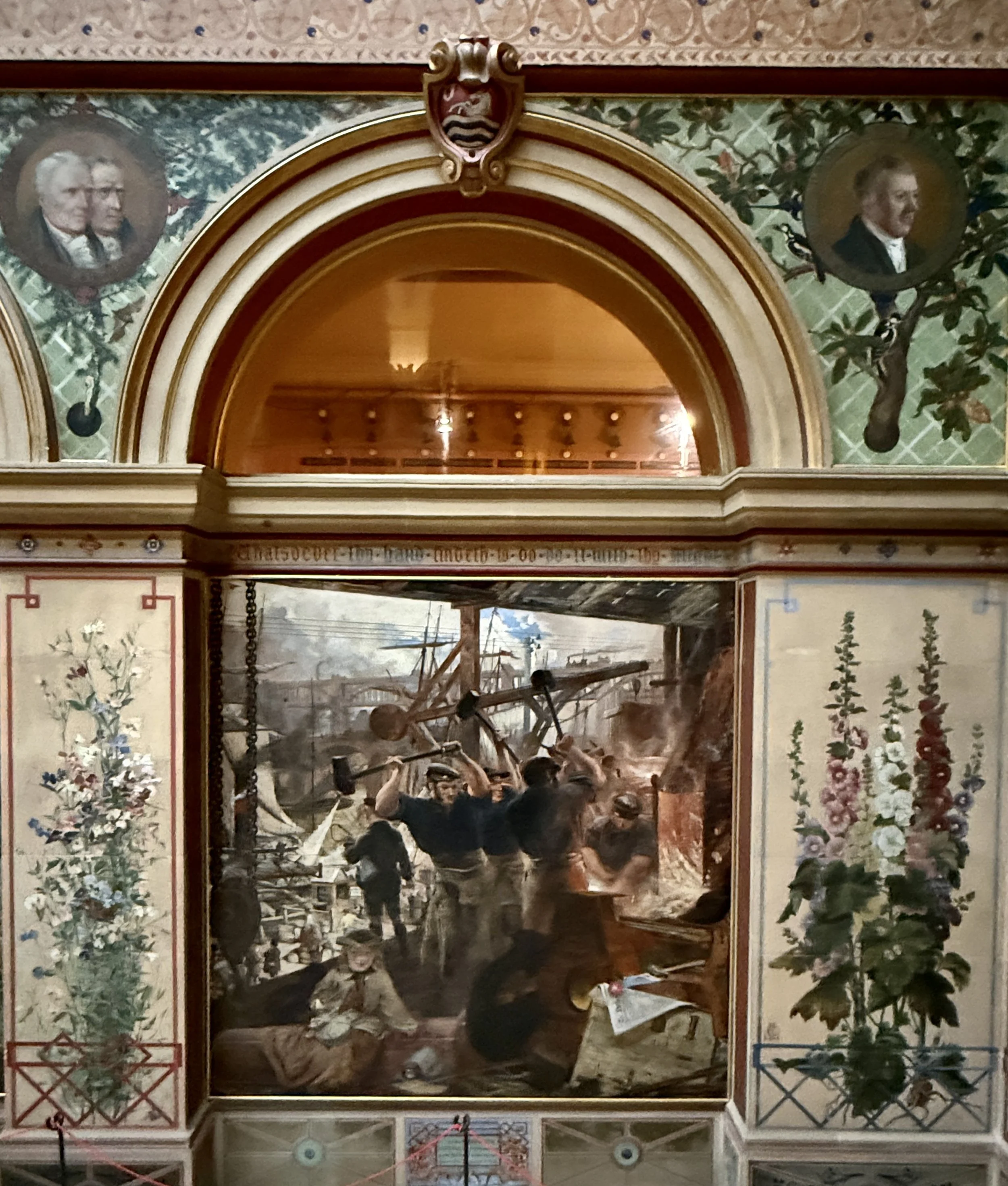
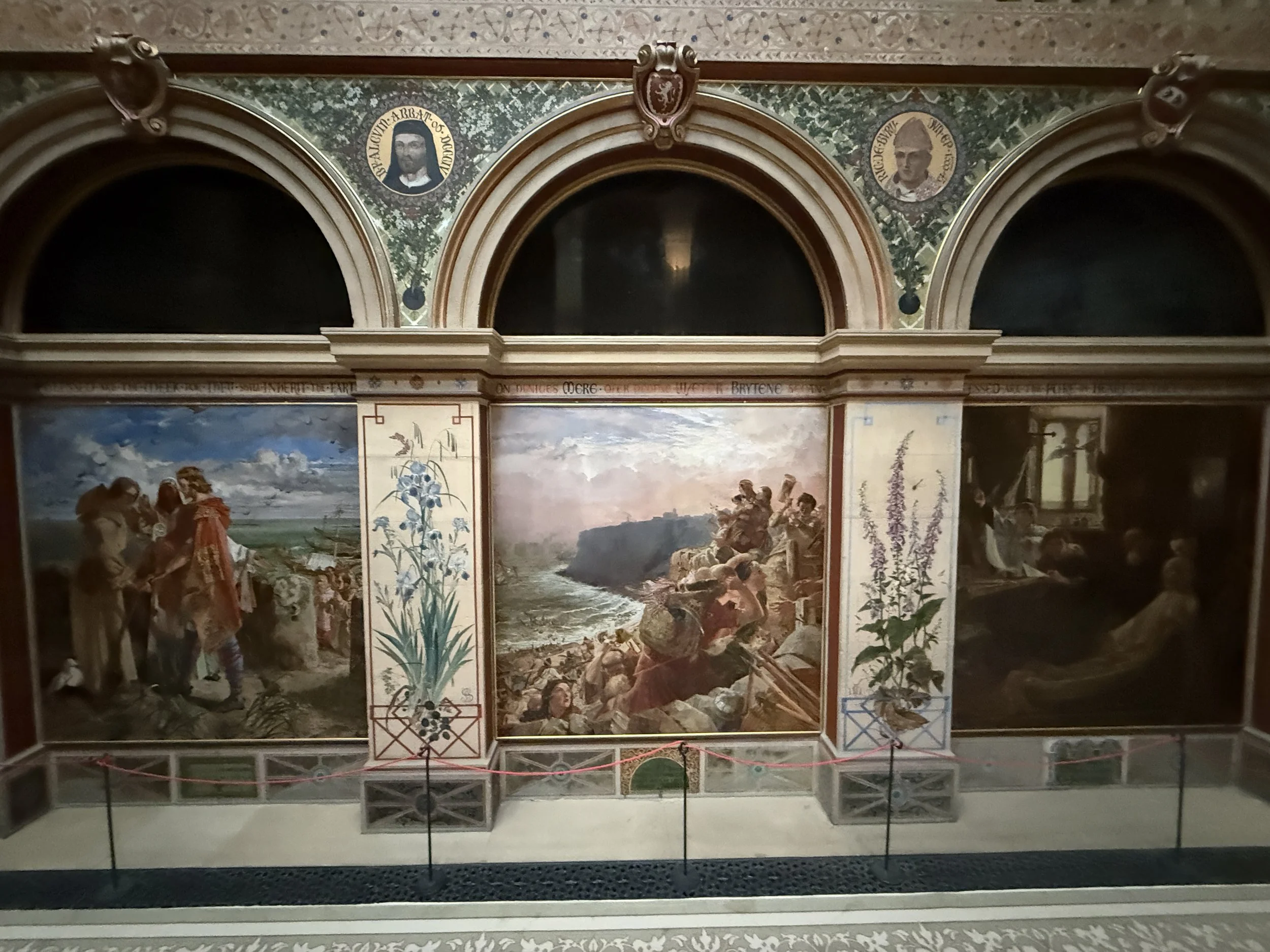
The Central Hall at Wallington is decorated with large panels by William Bell Scott and depict dramatic scenes from local history. The flowers that decorate the columns between these scenes are mostly wild, native English species and were painted by Lady Pauline Trevelyan (1816-1866) and her circle of female artist(ic) friends (with the exceptions of William Bell Scott and John Ruskin).
FOOTNOTES:
1.Family members, friends and estate workers posed as models for the main panels. John Clayton of Chesters (1792-1890), wealthy landowner, Newcastle Town Clerk and Classical scholar, appears as a Roman Commander. Clayton restored the section of Hadrian’s Wall around Sycamore Gap and Housesteads and was integral in the redevelopment of Newcastle in the ‘Classical Revival’ architectural style.
2.Family members, friends and estate workers posed as models for the main panels. John Clayton of Chesters (1792-1890), wealthy landowner, Newcastle Town Clerk and Classical scholar, appears as a Roman Commander. Clayton restored the section of Hadrian’s Wall around Sycamore Gap and Housesteads and was integral in the redevelopment of Newcastle in the ‘Classical Revival’ architectural style.
The poem focuses on the juxtaposition of female vs male art and history. While Lady Pauline and her female friends painted decorative motifs, the professional male artist, William Bell Scott, painted the large-scale scenes representing Northumbrian history in Pre-Raphaelite style. This dichotomy is indicative of the separation of male and female spheres of art and life of the time. Women were restricted in their artistic training and entry into professional artistic bodies. While Pauline was confined to painting flowers, it was she who transformed Wallington into a salon for High Victorian art, and it was she who commissioned the work in the Central Hall. She studied botany, languages and travelled extensively in Europe. Her sketches of Greece are in the British Museum.