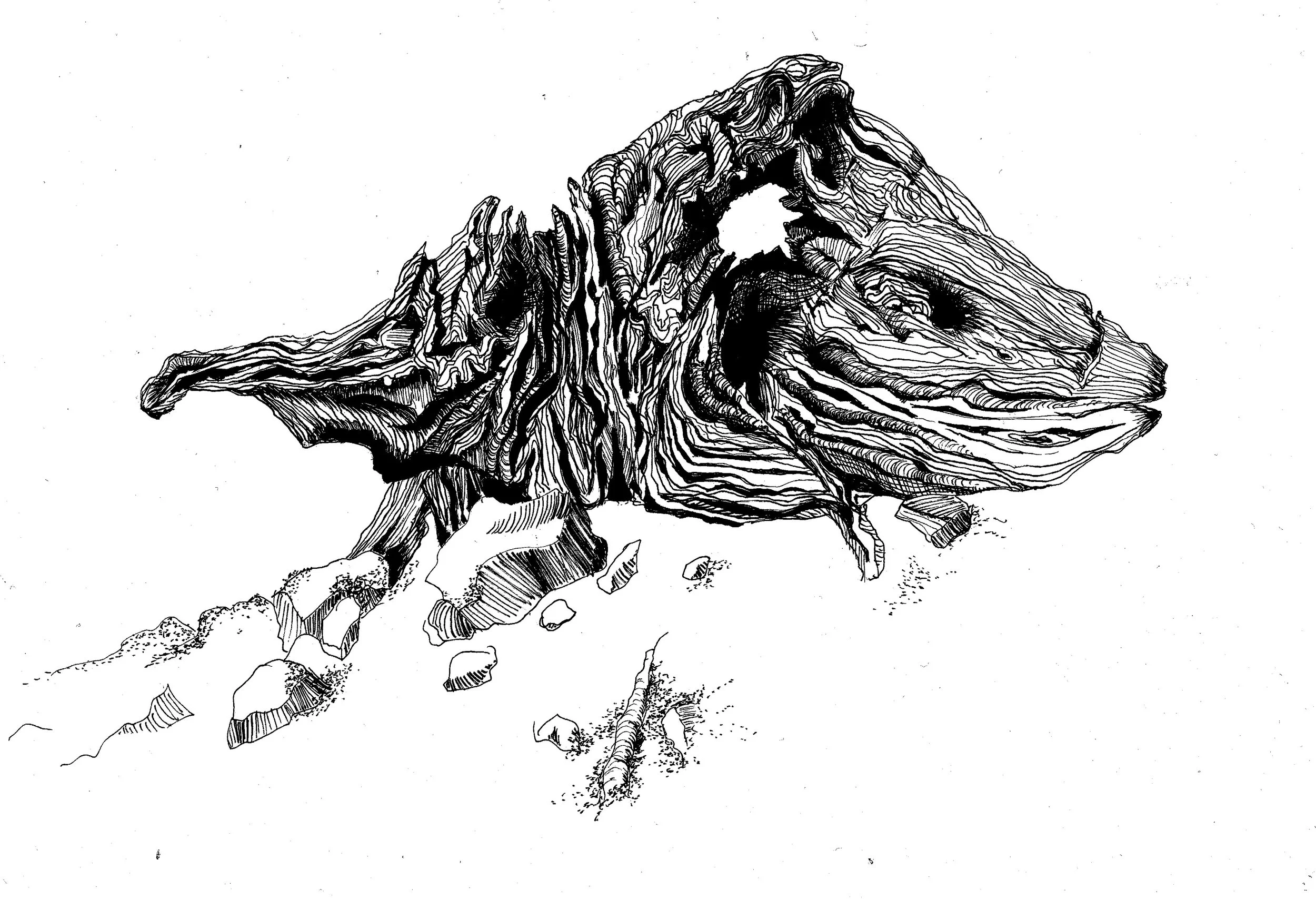
THE
BURR
PRESS
What is a burr?
A burr is the result of growth - but growth that is altered by something impeding or changing a usual pattern of growth.
It is growth nonetheless – and patterns of growth after an impediment showing up on the outside when, with we humans, such a change is often hidden.
The result can be beautiful and is always unique.
The Burr Press is a space that dedicated to growth and change, and the creativity that explores this – be it through creative rendition of the character of specific trees, the creative exploration of experience, or history, or (coming soon) the offering of space to step out of busyness - either for creative exploration, such as writing, personal reflection, or simply time out, perhaps walking in the beautiful natural environment.
The Burr Press has grown, too, from something that is difficult for me personally. It has grown from a path I am taking myself, often further and harder than feels comfortable, and on which I am learning to gently walk - the process of slowing down. It has come about as I adjust and reorientate different parts of myself to allow change at a deep level to maximise what I can do around health challenges that I may be unable to change.
It therefore has commonalities with The Slow Movement - centred around slowing life down. The movement is a reaction to the notion that faster or more is always better – but in this context is grew from a deeply personal journey through ill health to the realisation of my own need for a healing that allowed me to become more able to slow things down and It is also associated with sustainability, localism and a focus on improving quality of life by celebrating culture and social interaction.
The Burr Press is also committed to being a sustainable as as possible using recycled or fair trade materials when they are available, and leaving a small and imprint on this precious planet as is feasible.
Inherent to the Burr Press is an invitation that for me personally is a real challenge – slowing down. Therefore in someways it arises as much an invitation to myself as to others. The invitation to slow down even in whatever way can be challenging – but a slight easing, a slightly slower gesturing, a slight pause, a slightly easing, a slightly slower breath may be all that is possible initially. And the recognition and celebration of that little but of progress is critical - I find – coming against critical parts of me that have grown needing to be on the move, or feeling I am always falling short. ‘Why can’t I just ‘chill’ like other people - and what on earthe does ‘chill’ mean anyway. It is not in my physiological or neural biological capacity!’ But now I would add 'Yet!’
The reasons are legion, and require respect, compassion and time – not punishment and inner derision.
Rewiring the nervous system is a lengthy process - but it can happen, as remarkable improvement in my own health demonstrates.
TREE PORTRAITS:
The Tree portraits began as a way to extrapolate the experience of my woodland walks, taken (when my health allows), not to arrive anywhere, but in which to simply be open, present and to be able to listen, to look, to experience. I experienced that these things begin to coalesce slowly.
The Tree Portrait drawings have therefore grown from my need to ground and root myself. In trying to find a way to slow myself down I would wander in the woods - not to get somewhere - but to be and see and digest.
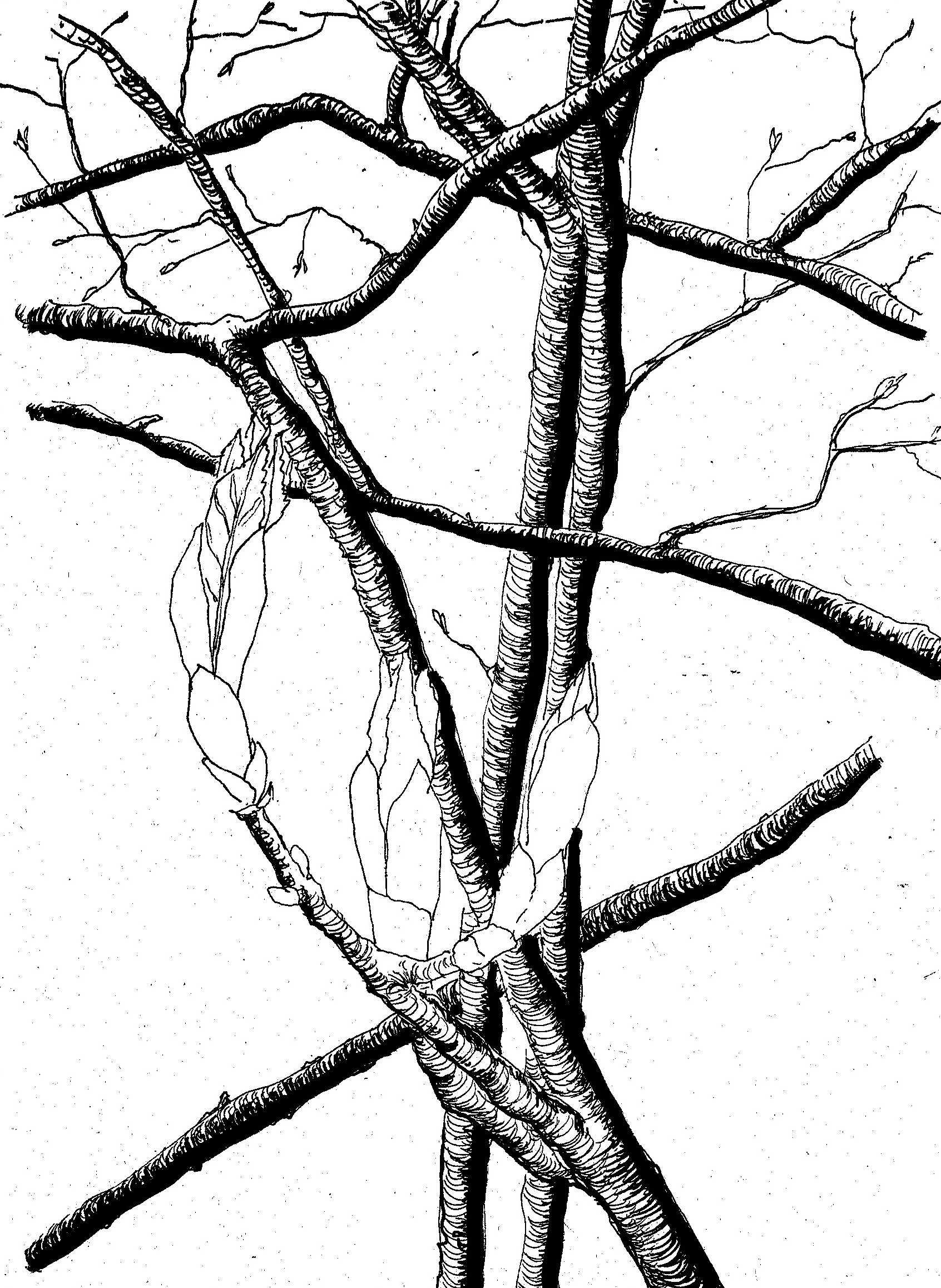
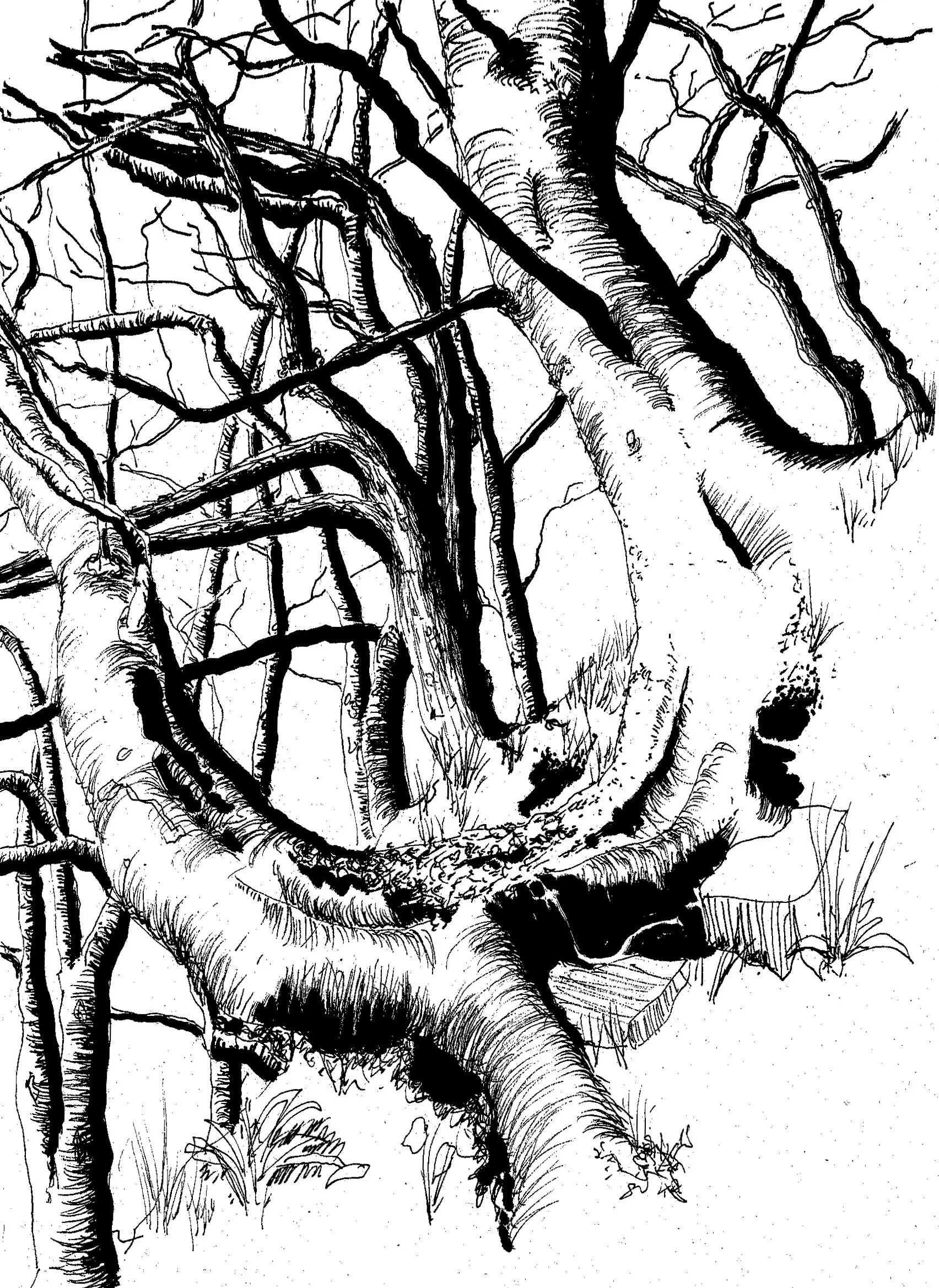
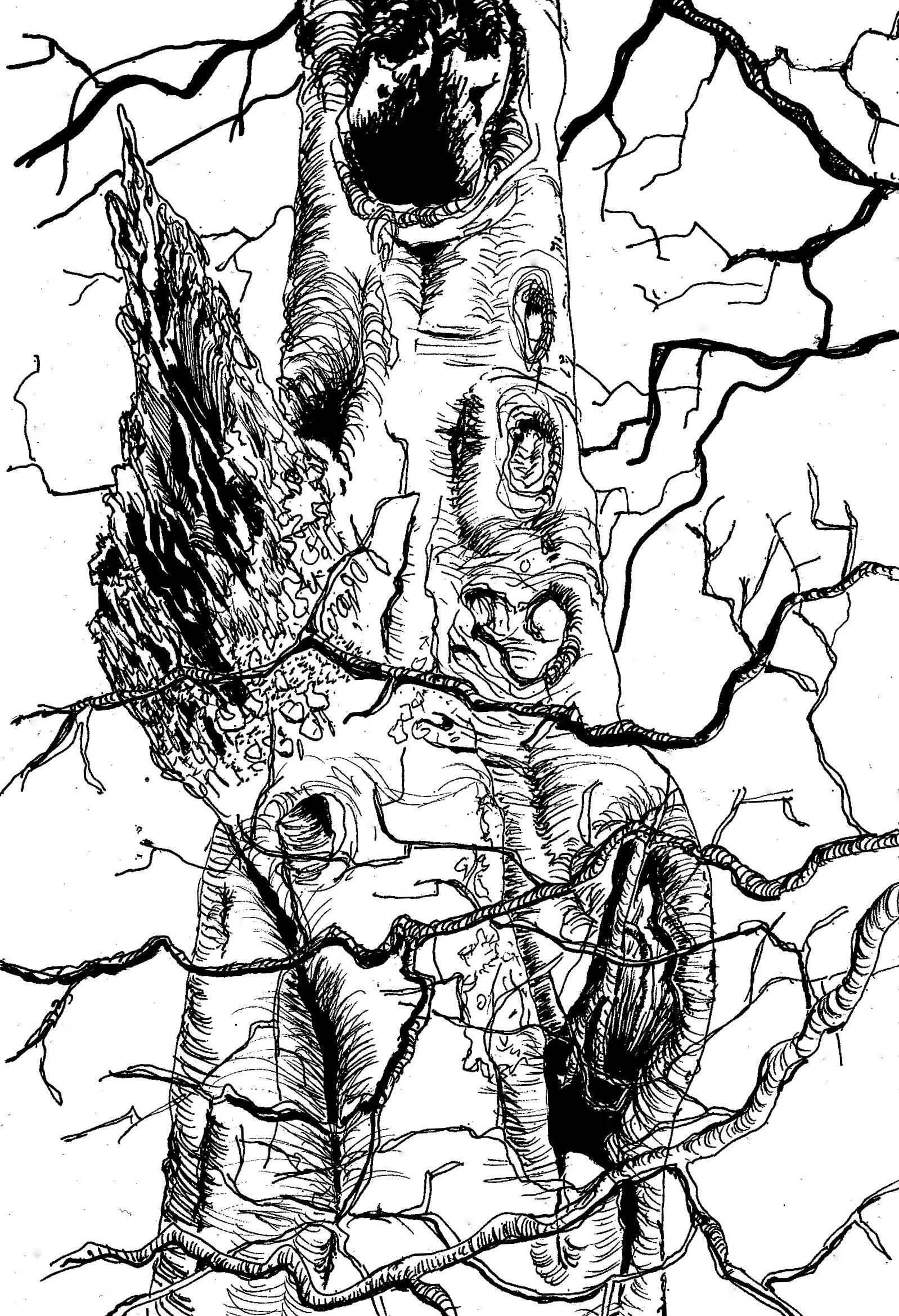
I take photographs of trees that touch me – whose form intrigued me. Like each person, each tree has a life story that I can only imagine. By studying them their form, their idiosyncrasies begin to speak. I found myself wanting to use this close seeing as a way to grow stillness for myself.
As I sit to choose a certain tree to begin to draw, I begin to be drawn in to the specificity of the tree’s very unique form in its specific environment. Clues to its unique narrative emerge through the study of its form. Inky life lines – as I came to think of it. Gradually I have found that closely observing trees has become a process of grounding and rooting myself - as if borrowing from their slow growth through their life a growth process of my own.
The slow walking itself is important – the bilateral movement we now know is so vital for processing difficult experiences, helping the brain integrate what is stuck.
The slow looking has been so important in helping me slow down and be fully present and become absorbed in the form of the tree, it’s immediate environment, and it’s idiosyncrasies – many of which may well arise from the environment in which it grew.
This slow looking gels the experience into slow seeing that allows my imagination to roam. Learning to see with my imagination is, I have found, a process of allowing my imagination to roam – exploring how this specific tree came to be the way it is. It may well be a process of anthropomorphising – but if so this is unashamedly part of relating to the trees I find – and honouring them.
After I have spent some time with a tree I take a photo – trying to capture what it is that drew my attention towards it, anything that attracted my interest.
This process then continues to work in me, creating a wonderful resource, enabling me to continue the process of both looking and seeing – when I return from a walk.
Being still is very hard for me – a deep neurobiological wiring issue! But the process of closely observing trees – on slow walks, and with slow drawing – has allowed me to create space to rest and restore as I return to one of the trees, and slowly begin to create a portrait of it. I have found myself seeking new mark making to represent a feature – which itself is growing my drawing.
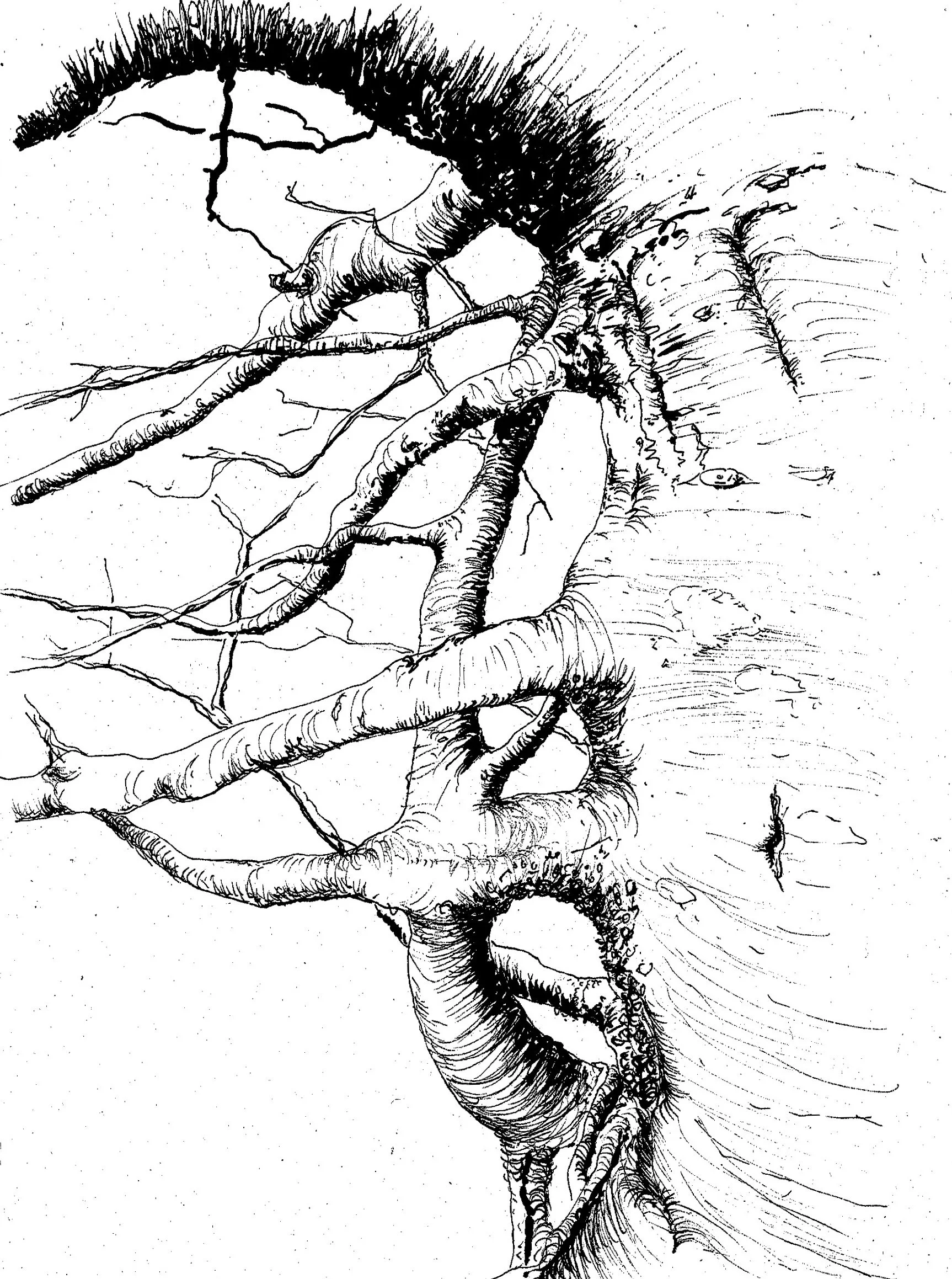
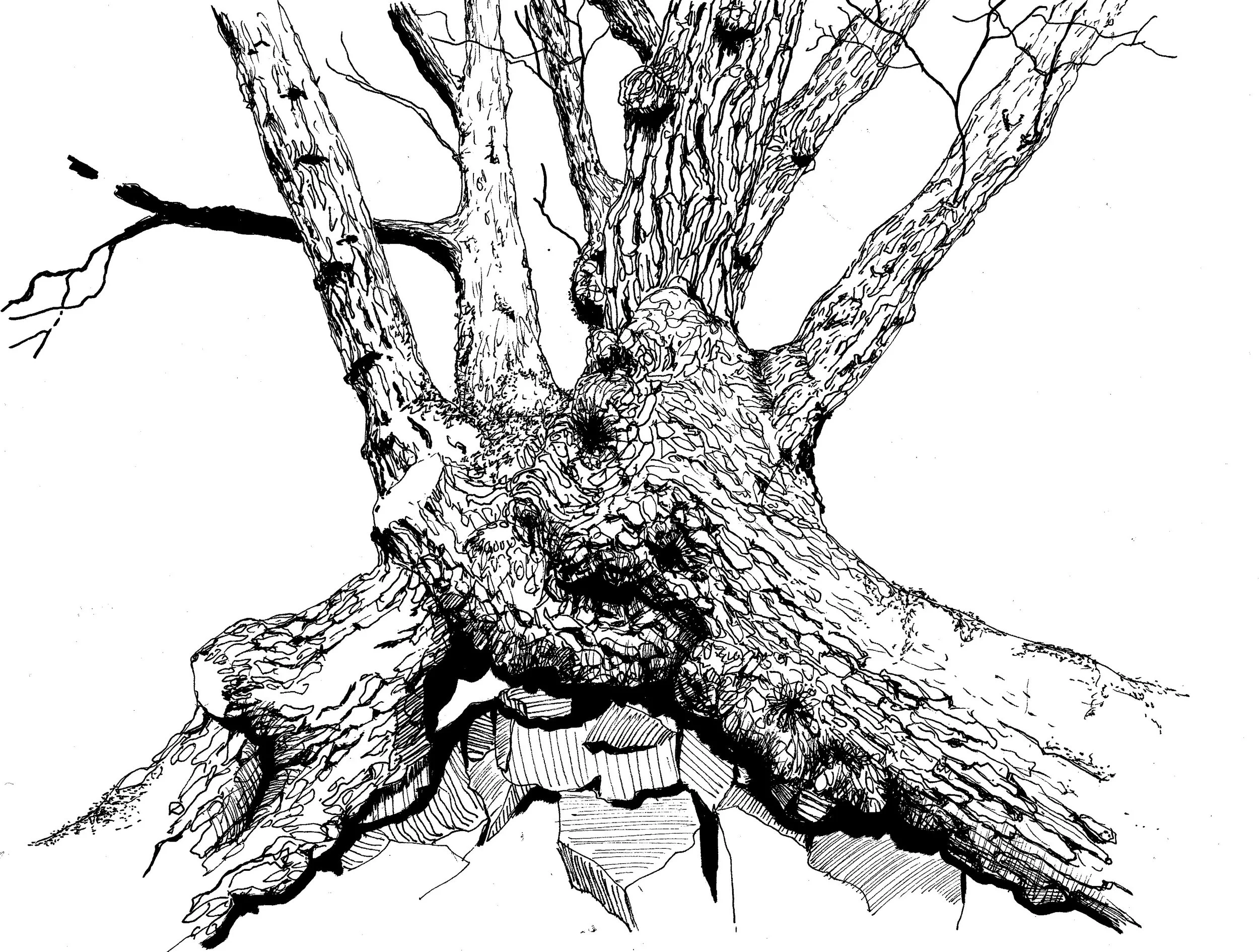
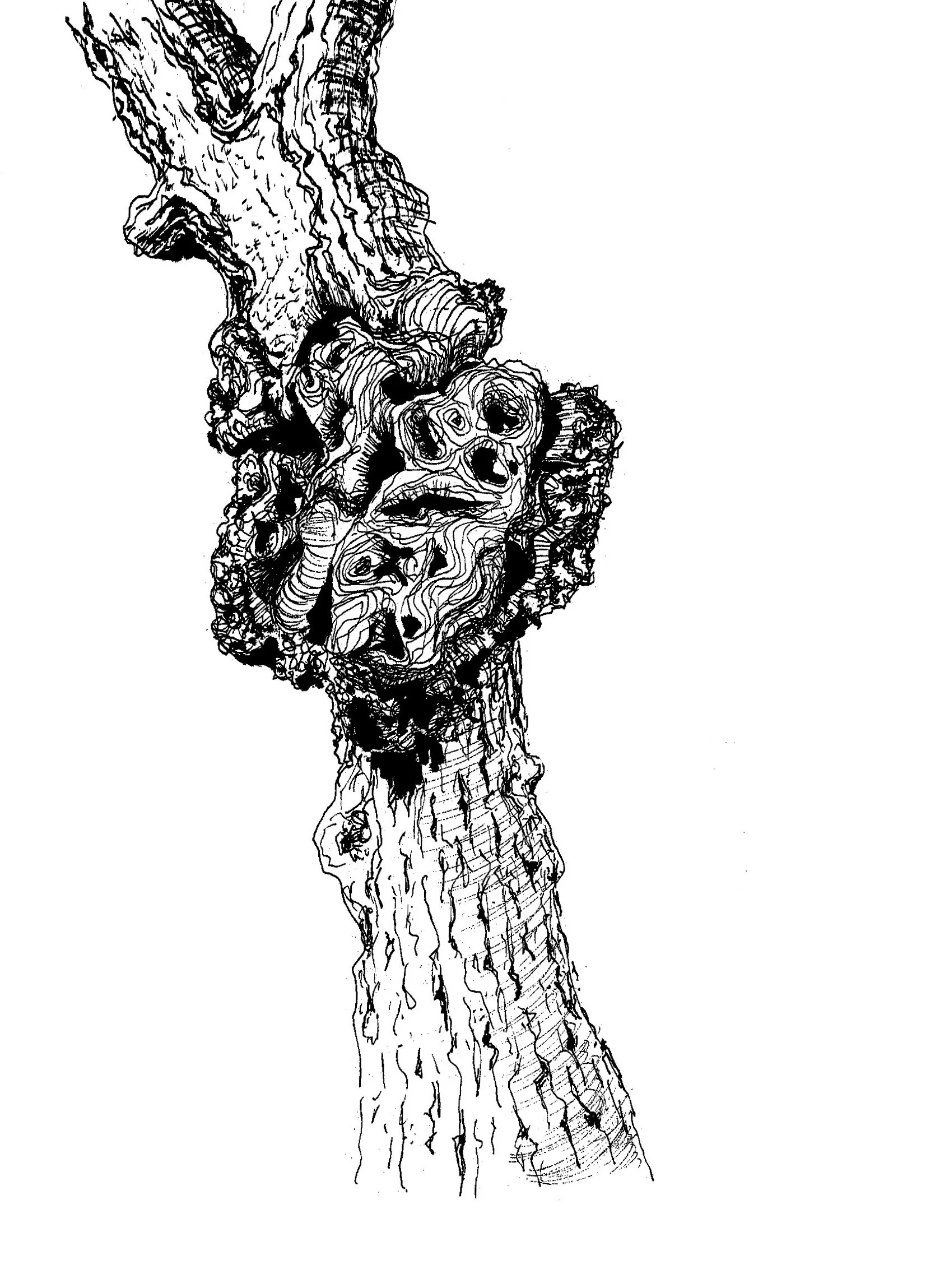
The Tree Portraits therefore are just that. They are a explorations of a tree’s specificity – it’s unique, and often quite unbelievable, form - such as the intermingling root systems or the healing growth around that has occurred a trauma or wound – such as the loss of a limb. The unique feature is sometimes post traumatic growth, and sometimes growth that is adapting to its specific environment. I can’t, nor is it necessary to know the tree’s story to appreciate the impact that contributes to its unique form and nature that I find.
I find that being in woodland is a place where curiosity and intrigue about difference dissolves the notion of the ‘normal’ – a place where beauty and ugliness dissolve into respect. Because very often a unique feature of the tree has grown around some kind of impediment: disease, injury, and striving to reach the resources it needs from the soil or the air.
This birthed the idea of the Burr Press.
The Tree Portraits are also a gentle joy to create because they extrapolate the positive experience of being in the woodland with whatever energy I have at that time, and continues a vital process of growing and changing myself, by coming home and being still – creativity being the catalyst for the vital process of rest and restore.
The first offering of The Tree Portraits is notelets – again a gesture towards slow considered communication of whatever sort that comes against the rushed missives that speed up and complicate our modern life.
Trees were havens for me as a child. I would climb ridiculously high and build dens as safe little homes in them. As we learn more about what science now understands about trees, through leading scientists such as Suzanne Simand, we find a growing congruence between how trees grow, and relate to one another and how, ideally, human societies can best relate for the common good. Cooperation and not competition.
The science is starting to accept that the native people of the world – who lived as part of nature, not in spite of it – inherently knew how this process best works. The working wisdom offers a model of how woodland and forests can be restored – even at the recent hour. Because relating more healthily to trees specifically, and nature more generally, is vital both to humanity generally, and to the health of each of us more specifically. I know that this can work – and alongside many other ways in which I am changing myself from inside out - one neural pathway after another – and the tree portraits are evidence of this working in my life.
Acknowledgements:
Special thanks to Anna, Amos, and Claire for invaluable help and without whose encouragement and commitment THE BURR PRESS and what it represents would not have been possible.
Thanks, too, to Beni and Zoli, to Louis, Holly, Polly and Olive and the rest of the Squid, to Janet, to Cousins Tony and Marina, to Sarah and Andrew, Nancy and Leza, Robyn and Juergen, Helen and Barbara, to Charlie, to Arielle and Ilene-Naomi and their vagal co-travellers, to The London Writers Salon, and to members of Carte Blanche.
Thanks to Sarah and Jean for being rebel writing companions.
WORDS:
The ‘Poetry of History’ is a space that steps creatively into the past and explores the shadows of whatever the subject is – be it cultural, political, architectural, natural or personal – with an aim of growing our understanding of whatever the subject is as work in progress through imagination.
It aims to expand our ways of seeing through the play of words, images, metaphors etc. There is rarely an absolute reading of anything. In bringing imagination to a subject we bring possibility for change – a change of understanding or perspective, and with that the potential for a change of the way we see and thinking about something. Such a change of attitude can actually also bring about neurobiological change too.
The space for creative writing has grown out of both creative projects that have sought to step back into history through extant environments (such as Wallington Hall) and out of a way of exploring its life as it happens through the lens of creative writing. In both cases it is a process of exploring and reevaluating a subject through our creativity – trying to process something from a different perspective.
SEATON DELAVAL
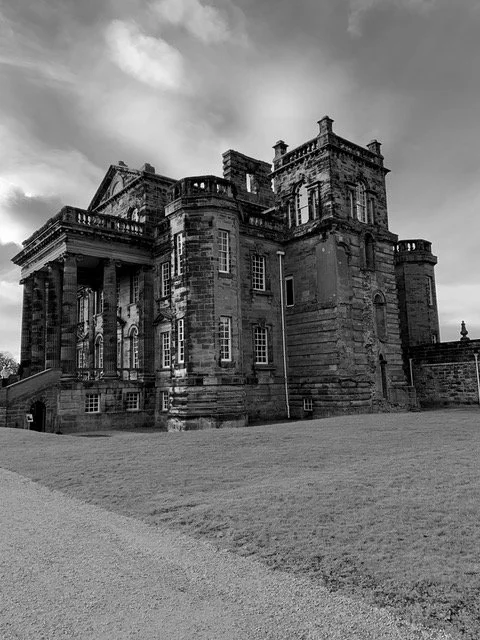
The first of the historic projects grew from a collaborative writing project between The National Trust and New Writing North at Vanbrugh’s magnificent Stately House at Seaton Delaval in 2021.
After the project was finished participants poems were pulled together into anthology Inaudible as Dreams (coming soon) edited by Sarah Benjamin, and published initially by Inky Lab.
WALLINGTON
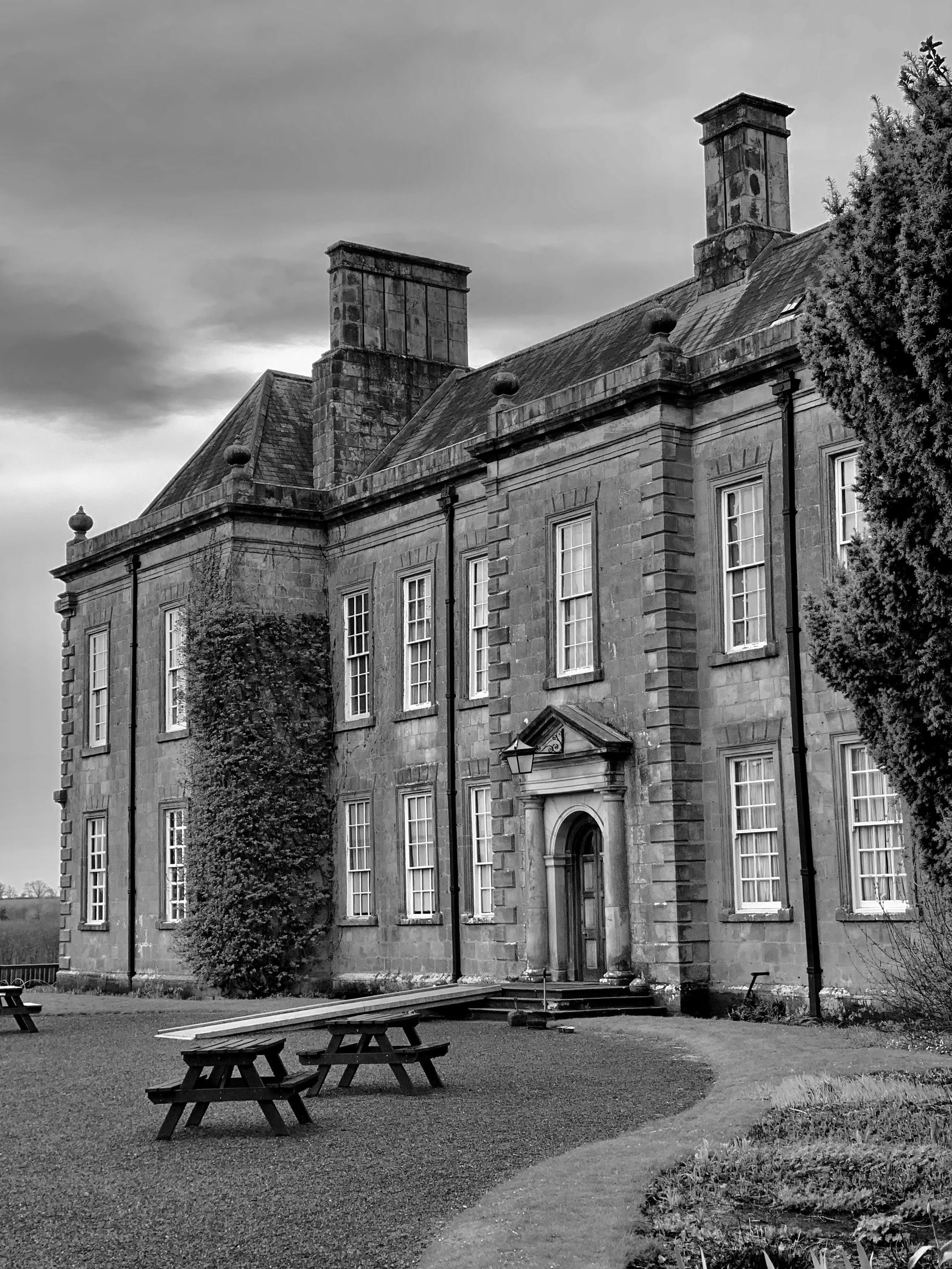
A small group of participants chose to go on and explore Wallington Hall, another National Trust property in Northumberland. Over some years poems have grown out of the exploration of the house its inhabitants and the environmental impact of the estate on the natural environement.
THE WANDERING NERVE- COMING SOON
This is a collection of poems that imbibe some daring - dare to explore life experiences growth and change in life. Some of these are published elsewhere.
CREATIVE SPACE:
Both the idea for and the physical reality of the offering of ‘Creative space’ has grown out of my home and my journey.
I have a background in architectural teaching and design. The spaces I made in adapting a 19th century Methodist Chapel into a home in which I brought up my children in the North Pennines has included making spaces for our creative projects of various kinds.
The building itself brings together a historic core and changed interior spaces – a metaphor for the ever changing experience of our own growth in life.
Since my children left home I have been able to reconfigure these spaces and offer them as creative space for others to come, to slow down in whatever way for ever pace they need. This might be to be able to be creative (writing, drawing, walking, making art or re-making oneself), or simple to ‘BE’ in a beautiful natural setting, and within an architecture of invitation. The spaces are an invitation for visitors to shape their time around whatever their individual needs are.
It is hoped that in the future there will be intermittent organised retreats of various sorts - either single day or multi-day – and either residential or non-residential.
EXPLORING THE NATURE OF A BURR
The word burr has a number of related meanings.
It can refer to a whirring sound, such as a phone ringing tone, cogs turning, or a rough pronunciation of the letter ‘r’, especially with a uvular trill such as in a Northumberland accent. Similarly it can also mean a rough edge or ridge left on an object (especially of metal) by a tool.But its most common meaning is a rounded abnormal growth on a tree.
Burrs are caused by the growth of wood grain around something impacting it - such as around a foreign object, a localised virus or fungus infection in the tree, which leads to the formation of many small knots formed from dormant buds. Like galls, burrs are abnormal growths on a tree, and the two are often used interchangeably. But galls are not limited to trees, growing on any part of a plant, and commonly caused by insects or disease.
Burr, on the other hand, only occur on trees and the reason for such misshapen form is often unknown. Sometimes burrs occur at spots on a tree that can sprout into a new branch when conditions are right (i.e., epicormic buds). However, genetics, injury, environmental conditions, and reasons unknown can activate the dormant bud and cause it to grow abnormally into a burr - rather like a tumour.
Burrs can therefore be associated with disease, adverse environmental impact or past injury, and the process of growth acts as the tree’s way of sealing it up and protecting itself, similar to scar tissue on an animal.
Just as burrs are beautiful, and create the unique character of the tree, so too are the ways we each grow around the circumstances of our environment, and challenges to our health and well-being. It is this commonality that attracted me to begin slowing myself down to draw tress and celebrate the manner in which they are what they are - warts and all. The burr is growth altered by something impeding or changing normal growth. It is growth nonetheless. The result can be beautiful and is always unique.
It’s not necessary to know the tree’s story to appreciate its impact that contributes to its unique form and nature.